
PR people get a bad rap from journalists. We're greasy, annoying, overpaid, out of touch, and we clog inboxes with irrelevant nonsense before calling to "check you got the release" five minutes after sending it. Journalists, am I missing any?
I can say this with some authority because I used to be one of those journalists. Before I started Payper, I was a journalist at Newshub (now ThreeNews) and I had a front-row seat to the daily avalanche of press releases, media invitations, and follow-up calls that made up a significant portion of my working life. Most of it was rubbish. Some of it was useful. And the PR people who sent the useful stuff were, whether they knew it or not, doing me an enormous favour.
That was more than ten years ago and dealing with the mountain of bad pitches was bad enough then. Now, it's on a whole other scale for journalists.
The inbox problem has become an inbox crisis
Journalists have always received too many pitches. That's not new. What is new is the scale. Cision's 2026 State of the Media Report, based on a survey of nearly 1,900 journalists across 19 markets, paints a picture that should concern anyone who works in media relations. Pitch volumes have increased by more than 200 percent since AI tools made it possible for anyone with a laptop to generate a press release and blast it to every newsroom in the country in under ten minutes.
The result is predictable: 88 percent of journalists say they immediately delete anything that doesn't match their coverage area. The average response rate to a PR pitch is now 3.43 percent. And more than half of journalists, 53 percent, say they're actively opposed to receiving AI-generated pitches or press releases.
This isn't journalists being precious. It's journalists being buried alive. We wrote about the AI pitch flood in more detail in our piece on how journalists are getting inundated with AI pitches, and the numbers have only gotten worse since.
The original deal between PR and journalism
Here's something that gets lost in the stereotype of PR people as inbox polluters: the original purpose of a PR professional was to be a filter, not a funnel. The deal, when it worked properly, was straightforward. Businesses have stories they want told. Journalists have audiences they need to serve. And PR people sit in the middle, figuring out which stories are genuinely worth a journalist's time and presenting them in a way that makes their job easier.
That's a useful role. When a PR person sends a journalist a well-researched pitch that matches their beat, includes a genuinely newsworthy angle, and comes with everything they need to write the story, they're not being annoying, they're being helpful. They're saving the journalist the time of finding that story themselves, and they're saving businesses the time of trying to navigate media relations without understanding how newsrooms actually work.
The problem is that too many PR people and agencies have abandoned the filtering part of the job. Instead of assessing whether a client's story is actually newsworthy before pitching it, they pitch everything, because it's easier to send a hundred emails than to have one difficult conversation. The other problem is that so many people, thanks to AI, are now bypassing PR people all the same and just pitching AI slop that has zero news value directly.
Why PR people need to be the first line of defence
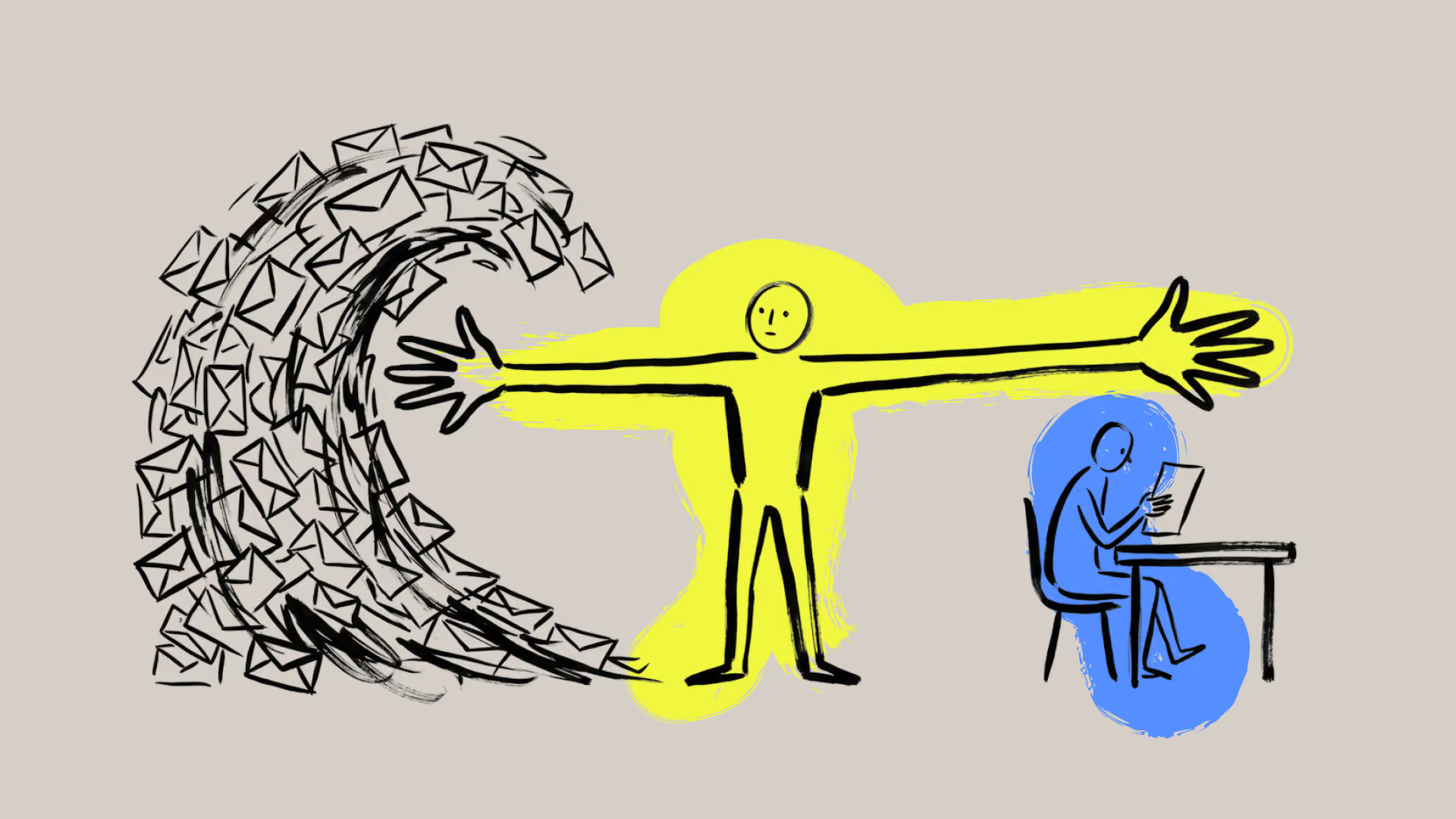
In the age of AI, this filtering role isn't just useful, it's essential. Because here's what's changed: the barrier to creating and sending a pitch has dropped to almost zero. Anyone can ask ChatGPT to write a press release. Anyone can use an AI tool to scrape a media database and mass-email every journalist in the country. The technology doesn't care whether the story is newsworthy, whether the journalist covers that beat, or whether the pitch has any substance behind it at all.
That means the volume of junk hitting journalist inboxes is only going to increase. And if PR professionals don't position themselves as the first line of defence, as the people who assess, filter, and quality-control what gets pitched before it reaches a journalist, then the profession loses whatever credibility it has left.
This is not a small thing. Cision's data shows that journalists' biggest concern about AI in PR isn't the technology itself, it's factual errors, irrelevant content, and the sheer volume of low-quality material that AI makes possible. When a journalist sees a pitch from a PR agency, they're making a split-second decision about whether to open it or delete it. If your agency has a track record of sending relevant, well-constructed pitches about genuinely newsworthy stories, your emails get opened. If you've been part of the spray-and-pray crowd, your name becomes a shortcut to the delete key.
The difficult conversation nobody wants to have
Being a filter means doing something that a lot of agencies avoid: telling clients when their story isn't strong enough to pitch. This is the part that makes people uncomfortable, because clients are paying you, and telling someone who's paying you that their idea isn't going to work feels counterintuitive. It feels like you're letting them down.
But letting them down would be pitching a weak story, getting ignored by every journalist on the list, and then reporting back with nothing to show for it. That's the actual let-down, and it happens every day at agencies that would rather avoid an awkward meeting than protect their clients from a waste of time and money.
I wrote about this recently in the context of turning away potential clients who aren't ready for PR. The same principle applies once you're working with someone. If a client comes to you with a story idea that isn't going to land, the most valuable thing you can do is say so, clearly and constructively, and help them develop something that will.
That's not a failure of service. That's the service.
What journalists actually want from us
I talk to journalists regularly, both in New Zealand and internationally, and the things they want from PR people are remarkably consistent. They want pitches that are relevant to their beat. They want the news in the first line, not buried under three paragraphs of company background. They want access to real people who can speak on the record, not sanitised corporate quotes. And above all, they want to trust that when your name appears in their inbox, it's worth five minutes of their time.
That trust is earned one pitch at a time, and it's destroyed the moment you send something lazy, irrelevant, or mass-produced. In a world where journalists are wading through hundreds of AI-generated pitches every week, the PR people who still do the work, who research the journalist, tailor the angle, and only pitch stories that genuinely deserve attention, stand out more than they ever have.
Our guide on how to pitch a journalist covers the tactical side of this in detail, but the underlying philosophy is simple: respect the journalist's time, and they'll respect yours.
Why this matters even more in New Zealand
New Zealand has roughly a quarter of the journalists it had 15 years ago. That's not a statistic, it's the daily reality of our media landscape. Fewer journalists means each one is covering more ground, working to tighter deadlines, and has even less patience for pitches that waste their time.
It also means the relationships matter more. In a market this small, the same journalist who covers your client's funding round might also cover their product launch six months later, and their CEO's opinion piece after that. If every interaction you have with that journalist is useful, relevant, and honest, you build something that no amount of AI-generated outreach can replicate: a relationship based on mutual respect and trust.
At Payper, our goal is simple. When a journalist sees Lewis's name or my name in their inbox, we want them to know it's going to be something worth reading. That's a high bar, and it means we pitch fewer stories than some agencies do. But the ones we pitch land, because we've already done the filtering that journalists don't have time to do themselves.
The choice the industry faces
AI isn't going away, and the pitch volume problem is only going to get worse. Every business with a ChatGPT subscription can now generate a passable-looking press release in thirty seconds and send it to every journalist in the country by lunchtime. The technology has democratised the ability to create pitches, but it hasn't democratised the judgement to know when a story is actually worth pitching.
That judgement is what PR professionals are supposed to provide. And if we provide it honestly, consistently, and with the journalist's interests alongside our client's interests, then we stop being the annoying inbox polluters of the stereotype and become something journalists genuinely need: a first line of defence against the noise.
I'd argue that's always been what good PR looks like. It's just that in 2026, the noise has gotten so loud that it's no longer optional, it's the whole point.
If you want to work with a PR agency that pitches stories worth reading and tells you honestly when yours isn't ready yet, get in touch here. We'd rather send ten pitches that land than a hundred that get deleted.