
For Immediate Release
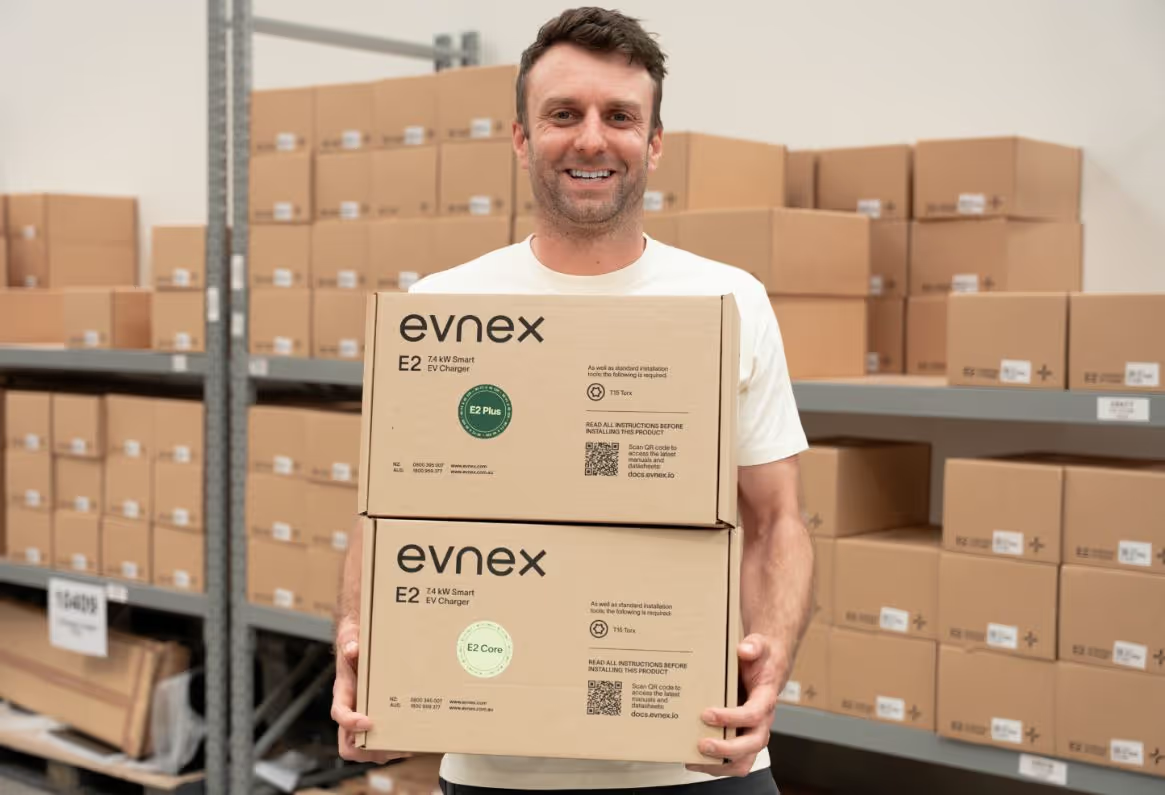
By Ed Harvey, CEO of Evnex, a Christchurch based EV smart charger manufacturer.
I first got into electric vehicles more than a decade ago in a small garage in Christchurch. I spent nights and weekends converting my old Honda Accord into an electric car. It was clunky, experimental, and a bit rough around the edges, but it showed me what was possible.
Back then it seemed like New Zealand was just getting started on electrification and it felt like we had a chance to be world leading. Looking at the Government’s latest decision to weaken the Clean Car Standard, it seems like we’ve completely lost that sense of direction.
Unfortunately, this move fits a pattern. The current Government simply does not have a credible electrification strategy. Instead, it has dismantled policies that were working and replaced them with very little.
The most frustrating part is that New Zealand had been catching up. The Clean Car Discount encouraged and helped thousands of households get into hybrids and EVs. If we had kept it in place, analysis shows New Zealand would have around thirty thousand more electric vehicles on the road today. That momentum has now evaporated.
We are being told that scaling back this Standard is about affordability. Transport Minister Chris Bishop said he wants to make it cheaper for New Zealanders to buy cars. But that completely ignores the fact that electric and hybrid vehicles are already cheaper to run over the lifetime of ownership. Fears about battery life are proving unfounded, with real world testing by Tesla showing batteries are lasting for more than 300,000kms. Many EV drivers are also charging for free or very little by taking advantage of off-peak power tariffs. Electric cars save people money long term and, like it or not, they are the future of transport. The research backs it up.
What really drives car purchasing decisions, though, is confidence. A vehicle is usually the second biggest purchase a family makes. When policies are stable, when standards are clear and when the Government signals long-term support for charging infrastructure, people are far more likely to make the jump. When everything is being reversed or watered down, they hesitate, and that is exactly why we’ve seen EV sales figures drop in New Zealand over the past few years.
So when officials say EV sales are lagging because New Zealanders “aren’t interested,” that simply isn’t true. People are hesitant because the Government hasn’t given them a plan they can trust.
The weakening of the Clean Car Standard is the clearest sign yet that the Government is listening more closely to industry groups who want to keep the status quo, rather than to the evidence in front of it. Australia’s emissions fee is around $100 for every gram of CO₂ per kilometre and we’ve just slashed ours to around $15. That is the scale of the gap we are opening between ourselves and the rest of the developed world.
We are better than this. New Zealand prides itself on its clean, green image, but that’s fast becoming disingenuous. However, if we act now we still have the chance to be a leader in clean transport. We have the renewable energy, we have the technology, and we have the innovative engineers.
But we cannot do it without clear direction from the Government. We need strong standards, long-term policy settings and a strategy that gives people confidence that New Zealand is not going backwards on electrification. Without that, we will continue to lag behind while other countries move ahead and reap the economic and environmental benefits that EVs offer.
We need to ask ourselves as a country: do we want zero and low emission cars powered by affordable New Zealand-made clean electricity, or do we want polluting vehicles powered by expensive imported oil?
I converted my Honda Accord to electric because I believed New Zealand could build a cleaner future. I still believe that. But it is getting harder to say it with confidence when the Government keeps doing a U-turn.